

The Impact of Self-Awareness On Employee Performance
The Impact of Self-Awareness On Employee Performance
Your team has the right skills. The experience is there. Yet something keeps getting in the way, perhaps feedback isn't landing, there is recurring conflict between colleagues Ultimately managers who can't understand why their approach isn't working.

Does any of this sound familiar?
After twenty or so years of supporting organisations across the UK, we here at My Training Shop have come to notice something crucial: performance problems rarely come down to capability. They often come down to self-awareness.
When people genuinely understand how they come across, what drives them, and how their behaviour affects others, everything starts to shift. Communication improves. Feedback lands. Performance follows. Here at My Training Shop, building that self-awareness through Everything DiSC assessments is central to everything we do.

What Does Self-Awareness Actually Mean at Work?
Self-awareness is one of those phrases that gets used a lot without being properly defined. In a workplace context, self-awareness has two distinct sides and both matter.
Internal and External Self-Awareness
Internal self-awareness means understanding your own values, emotional reactions, and behavioural tendencies. For example, knowing that you lose patience when decisions drag on, or that you do your best work independently rather than in collaborative settings.
External self-awareness means understanding how others actually experience you. Does your directness read as confidence or aggression? Does your measured approach come across as calm authority or disengagement?
Here's the problem: research shows that while 95% of people believe they're self-aware, only around 10–15% genuinely are. That gap matters enormously at work. Employees who lack self-awareness struggle to develop because they can't accurately identify where the difficulty lies, so no amount of feedback or training quite gets to the root of the problem.
Why Self-Awareness Has a Direct Impact on Performance

Most managers will recognise this situation. A team member receives developmental feedback and immediately becomes defensive. The conversation goes nowhere, nothing changes, and the manager is left wondering how to move forward.
This rarely happens because the employee is unwilling to improve. It happens because the feedback feels inaccurate to someone who can't yet see their own behaviour clearly.
From Reactive to Intentional
Assimilating to: Reactive behaviour being like driving a car navigating only by using the rear-view mirrors, constantly adjusting to what has just happened. Where as Intentional behaviour would mean the use of GPS or a map, setting a clear destination and proactively navigating to stay on course.
When employees develop a genuine understanding of their behavioural tendencies; what energises them, what frustrates them, how they respond under pressure, they become far better placed to manage themselves deliberately. For example, a’ results-driven’ employee who understands their tendency to move fast can start to recognise when that pace serves the team and when it's shutting down everyone around them.

Self-awareness doesn't change who someone is. It gives them a clearer picture of themselves so they can make more conscious choices. That shift from reactive to intentional is what drives sustained performance improvement.
The Role of Self-Awareness in Workplace Communication
Communication difficulties are among the most consistent issues we hear from HR teams and managers. Misread messages, misaligned expectations, and colleagues who've worked together for years and still manage to frustrate each other regularly. Just look at the research cited by Business Forums International, shockingly, it reports:
- 50% of employees say poor communication has increased their stress levels,
- 34% say it has decreased their job satisfaction.
- 22% have considered leaving their job because of it.

....It's common. It's costly. And it's often entirely preventable!
Learning to Flex Your Style
Once people understand their own communication style, they can adapt it. For instance, someone who defaults to brief, outcome-focused messages can learn to add context for colleagues who need it, while someone who over-explains can develop greater conciseness.
Everything DiSC Colours
🟢 D – Dominance
🔴 i – Influence
🔵 S – Steadiness
🟡 C – Conscientiousness
Neither person has to change who they are; it’s just that they learn to flex.
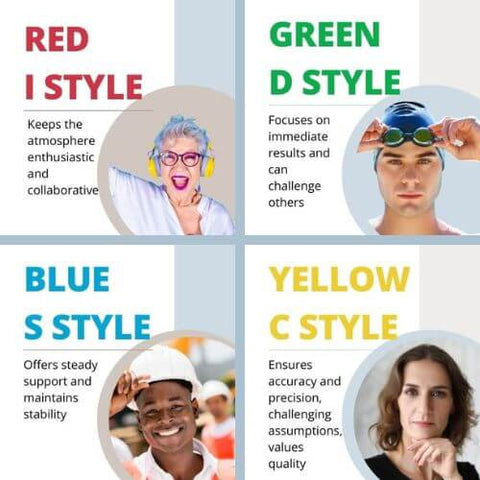
This is exactly what we observe when teams complete Everything DiSC® assessments together. Example: The colleague labelled dismissive could turn out to be a high-C style: precise and methodical, not cold.
Vs
The person often described as overbearing being a strong-D style: driven and action-oriented, not aggressive.
When both parties understand what's actually happening, the tension has a frame. And it becomes something to work with rather than something to resent.
Self-Awareness and Leadership Effectiveness
If self-awareness matters for every employee, its impact is amplified significantly in leadership. A leader's behavioural tendencies don't just affect their own performance, they ripple through the entire team.

According to Gallup's State of the Global Workplace 2025 report, just 10% of UK workers report feeling engaged at work, disturbingly one of the lowest rates globally in turn costing the UK economy an estimated £293.5 billion in lost productivity each year. The report identifies manager behaviour as the primary driver, with 70% of the variance in team engagement directly attributable to the manager.
The essential question is, how much is a lack of engagment across your team costing your organisation?
For more detail why not take a look at this article: How Profiling Boosts Self Awareness
Where Blind Spots Become Business Problems
The Everything DiSC® Work of Leaders profile maps leaders across the dimensions that drive results, vision, alignment, and execution. What it consistently reveals is that leadership strengths and blind spots are directly tied to behavioural style.

A D-style leader who doesn't recognise their tendency to push forward without sufficient consultation can damage trust across the team, even when their decisions are sound. An S-style leader who instinctively avoids difficult conversations may be widely liked, but quietly allows performance issues to persist unchecked.
Every DiSC style brings genuine strengths to leadership. Self-awareness is what allows leaders to draw on those strengths deliberately and to catch themselves before a natural tendency becomes a problem.

Building Self-Awareness Through Everything DiSC®
Self-awareness can't be developed through reflection alone. Most people need an external, reliable source of insight, something that shows them what they can't easily see themselves.
Assessment and Ongoing Development
Everything DiSC® assessments give individuals a research-backed picture of their behavioural tendencies across:
- Communication
- Decision-making
- Conflict
- Collaboration.
And, because no style is presented as superior, people engage with their results honestly rather than defensively.
For sustained development, Everything DiSC® on Catalyst™ goes further. Every learner has a personalised profile they can return to at any time.
Within the Catalyst platform individuals or managers can compare their style with a colleague/colleagues before a challenging conversation, review their motivators and stressors, and continue building their self-awareness long after the initial session.

DiSC on Catalyst means savings on the cost and inconvenience of obtaining facilitators reports too.
Take a look at this Article, the Smarter Way to Run DiSC on Catalyst Across your Organisation to decide if Catalyst could be a great option for you.
Why Choose My Training Shop
We're an Everything DiSC® Authorised Partner with over two decades of experience supporting/supplying Trainers, HR Professionals, Coaches, and Organisations across the UK with the suite of Everything DiSC products.
Our approach is always practical rather than theoretical, and tailored to your specific context. If you are familiar with DiSC you can simply place your order here, for Everything DiSC Workplace Reports or here for the dynamic DiSC on Catalyst,
Either way you can choose to have the access codes forwarded to you or directly to your cohort.
© Sian
Contact us today:
My Training Shop LTD
Sian Phillips
Phone: 07876 469651
Email: info@mytrainingshop.co.uk
Website: https://mytrainingshop.co.uk/
Alliteratively, we offer free 30-minute consultations if you need to discuss your specific situation, no obligation, simply an honest conversation about what might work for your organisation.
Frequently Asked Questions
Q: Can self-awareness make a measurable difference to employee performance?
A: Yes. Employees with higher self-awareness consistently make better decisions, communicate more effectively, and are rated as stronger performers by their managers with measurable improvements in productivity, conflict reduction, and retention following DiSC-based development.

Q: How is Everything DiSC® different from other workplace assessments?
A Everything DiSC® Workplace in English is validated and certified by the European Federation of Psychologists' Associations (EFPA) as an occupational test tool in the UK.

It provides individuals with practical language and targeted strategies they can apply in real workplace situations straight away.
Q: What if some team members are resistant to completing a profile?
A: Some resistance is normal, from some people as they can worry about being categorised. DiSC is a starting point for conversation and self-reflection, not a fixed verdict. Scepticism typically dissolves once people engage with their own report and recognise themselves in it. However, the majority of individuals enjoy the principle of self discovery,

For more on how DiSC works, visit our DiSC FAQ page.