

The Role of Internal Communications in Effective People Management
Better conversations build better teams.
Discover how understanding behavioural styles helps managers communicate with greater clarity, confidence and impact.
Ask any manager what keeps them up at night, and communication problems will feature somewhere on the list, a message gets lost between the boardroom and the shop floor. A change lands badly because nobody explained the “why.” A good decision gets undermined simply because people heard about it too late, heard it wrong or didn't get to know about when they should.

Trust levels are slipping, too. According to the CIPD Good Work Index 2025, published by the Chartered Institute of Personnel and Development, only 37% of employees say their manager allows them, or their representatives, to influence final decisions at work. That’s a serious warning sign for anyone managing people day to day.
At My Training Shop, we have spent more than two decades helping UK managers get their message across. What we have learned is simple: internal communications isn’t a task you tick off. It’s a skill, and it depends heavily on understanding the people you’re talking to.
Why Communication Breakdowns Happen So Often
Here’s an uncomfortable truth: most managers believe they’re communicating clearly. Their teams often disagree. That gap between what’s said and what’s understood sits at the heart of almost every people management problem we see.

Why does the gap exist? Partly because organisations treat communication as one-way traffic. A memo goes out. A slide deck gets shared. Job done, or so it seems. But people don’t process information identically, and a message that lands well with one team member can completely miss another.
At My Training Shop, we have worked with managers who wrote beautifully clear emails that still caused confusion. However, the words weren’t wrong; it’s just that the delivery did not fit the audience. And this is where behavioural understanding changes the game. Understanding what DiSC profiling is helps managers see communication less as a broadcast and more as a two-way exchange that needs adapting.
How Different Behavioural Styles Hear the Same Message Differently
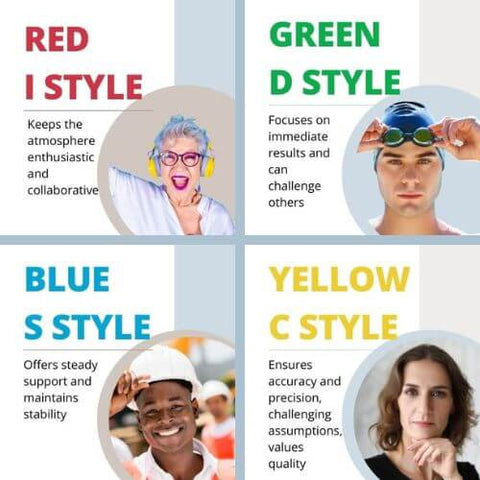
Everything DiSC groups behaviour into four broad styles. Once you know how these show up at work, internal communication stops feeling like guesswork.

Results-driven employees (D style)
These team members want the headline first. Give them background before the point, and you’ll lose them halfway through. Bullet points beat paragraphs, and deadlines beat vague timeframes.
They respond best to:
- Brief, direct updates
- Clear decisions and next steps
- Minimal small talk
People-focused employees (i style)
Warmth matters here. A dry, formal announcement can feel cold, even if the content is fine. These employees want context about how a change affects people, beyond the process itself.
They respond best to:
- Face-to-face or video updates over email alone
- Enthusiasm and personal touches
- Opportunities to ask questions publicly
Steady, supportive employees (S style)
Sudden announcements unsettle this group. They need time to process change and reassurance that things will remain stable where possible. Rushed communication reads, to them, as a lack of care.
They respond best to:
- Advance notice, not last-minute updates
- Written follow-ups they can refer back to
- A calm, patient tone
Quality-focused employees (C style)
Detail is not optional here. Skip the supporting data, and this group will fill in the blanks with worst-case assumptions. They want the reasoning laid out, alongside the conclusion.
They respond best to:
- Written detail alongside verbal updates
- Time to review before responding
- Facts over emotive language

Managers who can recognise these patterns, even informally, start pitching their messages far more accurately. Our Everything DiSC Management programme builds exactly this skill, giving managers practical tools for adapting how they communicate with each person on their team.
Where Internal Communication Makes the Biggest Difference
Cascading Change
Nothing tests communication quite like organisational change. Handle it well, and people feel involved. Handle it badly, and rumours fill the silence. Acas research puts the cost of workplace conflict to UK organisations at £28.5 billion a year, much of it linked to poorly handled disputes and change that was never properly explained. That’s exactly the kind of gap that turns manageable change into resistance.
Managers who explain the reasoning behind a decision, alongside the decision itself, build far more trust. That’s true whether you’re announcing a restructure or a new piece of software.
Everyday Feedback
 Feedback is internal communication at its most personal, and it’s where behavioural mismatches cause the most damage. A blunt comment that a results-driven employee shrugs off might genuinely upset a steadiness-focused colleague. Our Everything DiSC Productive Conflict programme helps managers deliver feedback in a way that lands as intended, not as an attack.
Remote and Hybrid Teams
Distance removes the small, informal moments where misunderstandings usually get caught and corrected quickly. Over a quarter of UK employees now work hybrid roles, according to Office for National Statistics figures reported in the Guardian, so managers increasingly rely on written and digital channels rather than a quiet word in the corridor. That makes deliberate, style-aware communication far more important, not less.

DiSC on Catalyst™ gives managers instant access to a colleague’s communication preferences before a call or a message goes out, which matters enormously when there’s no body language to read.
Everything DiSC on Catalyst provides your individual organisation with an interactive platform where employees profiles sit and where comparison reports can be drawn up in the moment.
Leadership Visibility
 Employees judge leaders on consistency as much as content. If senior updates feel scripted or arrive irregularly, cynicism creeps in fast. Get this right, and the payoff shows up in everyday behaviour: teams stay calmer through change, fewer small issues escalate into formal grievances, and people are more willing to raise concerns before they become a problem. Our Everything DiSC Work of Leaders programme focuses specifically on how leaders build clarity, dialogue, and inspiration into every message they send.
Building an Internal Communications Habit, Not a One-Off Fix
Fixing communication problems isn’t about writing a better memo. It’s about building a habit across your management team, and here is what tends to work.
Start with self-awareness

Managers first need to understand their own default style. A results-driven manager who never realises they’re too blunt will keep repeating the same mistake, no matter how many training sessions they attend. Everything DiSC Workplace assessments give managers that starting point.
Train for adaptability, not scripts

Nobody wants a manager reciting a formula. What works is teaching managers to read a room and adjust naturally. Our WORKSMART for Managers programme focuses on short, practical topics managers can apply immediately, including giving feedback and managing everyday interpersonal friction.
Build in feedback loops

Communication is only good if it’s understood, rather than sent. Encourage managers to check understanding rather than assume it. A quick “what did you take from that?” catches misunderstandings before they cause damage.
Keep messages proportionate to change
A minor process tweak doesn’t need a company-wide town hall, and a major restructure shouldn’t be announced by email alone. Matching the format to the significance builds trust over time.
You may find this article helpful: Utilising Everything DiSC for Performance Appraisals
The Business Case for Better Manager Communication
Communication skills often get treated as a “nice to have” rather than something that affects the bottom line. The numbers say otherwise. Poor communication drives up staff turnover, slows decision-making, and fuels avoidable conflict that eats up management time.

Meanwhile, teams that trust their manager to communicate honestly report stronger engagement, fewer misunderstandings, and faster recovery from setbacks. Given that trust in senior leadership is falling nationally, the manager relationship becomes even more important as the place where trust is either rebuilt or lost entirely.
Moving Forward
Better internal communication starts with understanding your managers and their teams, not with new software or another policy document. A sensible starting point could look like this:
- Assess your current communication gaps – where do messages consistently get misunderstood?
- Introduce a behavioural assessment – Everything DiSC Workplace gives managers a practical starting point. Our Buyer’s Guide explains which option suits your organisation.
- Train managers in adapting their style – not scripting their words.
- Build feedback checks into everyday communication.
- Review and adjust as your teams and channels change.
Why Choose My Training Shop
For twenty years more. we’ve worked exclusively with UK organisations on behavioural understanding and communication. As the managing director, I have extensive experience training and assessing within various organisations. in addition to creating and selling two business of my own.
We chose to work with Wiley, the worldwide and respected publisher, because thier Everything DiSC reports not only use adaptative questioning but is a recognised instrument in the UK (English version)
We are an Authorised Everything DiSC partner in the UK and certified in Everything DiSC assessments, and we’ve supported managers. We now mainly focus our time on supporting and supplying Learning and Development practitioners and HR departments with the delivery of DiSC across sectors ranging from healthcare to manufacturing to financial services to technical.
We don’t simply supply you with Everything DISC services and walk away. If required we will consult with you to establish the best route forward. Once our customer we can supply you with resources free of charge along with updating you on any developments that may assist your practice.
Contact us today:
My Training Shop Ltd
Sian Phillips
Phone: 07876 469651
Email: help@mytrainingshop.co.uk
Website: https://mytrainingshop.co.uk/
We offer a complimentary 30-minute consultation to talk through your organisation’s communication challenges. No pressure, just a genuine conversation.
Frequently Asked Questions
Q: How is internal communication different from general management skills?
A: Management covers the full scope of leading people; internal communication is the specific skill of getting information across clearly and in a way that lands. A manager can be organised and fair but still struggle if their communication style doesn’t suit their team.
Q: Do we need a DiSC assessment for every manager, or just senior leaders?
A: Ideally, every manager benefits, since communication problems tend to start at the point closest to employees, rather than at the top.
Q: Can this work for remote and hybrid teams specifically?
A: Yes. In fact, remote working often makes behavioural awareness more valuable, since managers can’t rely on body language or informal chats to catch misunderstandings early.

Q: What’s the first step if we want to improve internal communication?
A: Book a free consultation with us. We’ll talk through your specific challenges and recommend a suitable starting point, whether that’s an assessment, manager training, or both.
© Sian