

How to Facilitate an Engaging Everything DiSC Workshop: 5 Interactive Activities
Beyond Icebreakers: Why Engagement is the Catalyst for Behavioural Change
Have you ever attended a workshop that left you feeling more bored than inspired? literally leaving the learning behind as you walk out of the room? Or you have all the best of intentions of implementing learning and feel totally enthused as you leave a training session, only for everything to fade over the following few days or weeks - I certainly have!

I have written this article to help you ensure that your Everything DiSC® workshop is dynamic, interactive, and leaves participants eager to utilise their learning back in the workplace?
Jon Wiley's Everything DiSC® is a widely respected personal development tool used by organisations around the world to improve teamwork, communication, and productivity. Research-based and validated DiSC Workplace® assessment (English) has been DNV-GL certified as an occupational test tool in the UK.
About Me
I'm Sian, a certified trainer, facilitator and Authorised Everything DiSC® Partner. With a passion for personal and professional development and over 20 years of experience in developing and conducting workshops. I now enjoy supporting others with utilising the power of the Everything DiSC® model. Designed to help foster workplace harmony, improve team dynamics, enhance communication skills and ultimately increase production.

Here at My Training Shop we place our focus on the successful delivery of Everything DiSC. The aim being for you to deliver interactive, engaging, and to stimulate meaningful change. I believe in the power of experiential learning and am committed to supporting you with reports, resources and advice (if required), so you can facilitate enlightening and enjoyable workshops.
Feel free to personalise the details based on your own experience and expertise! Running a course using Everything DiSC can transform a conventional training session into an engaging journey of self-discovery and enhanced interpersonal dynamics.
In case you aren't aware of the differences between Everything DiSC® and DISC then you might want to reference this article: DiSC vs Everything DiSC
While the content of a DiSC course is critically important, the way it's delivered can make a significant difference. A group learning session that merely explains DiSC concepts without engaging participants, will create interest but WILL fall flat, missing the opportunity to truly impact behaviours and relationships within their team.

The key to a successful Everything DiSC workshop lies in leveraging activities that not only convey the principles of DiSC but also encourage active participation and self-discovery.
Through thoughtful planning and creative facilitation, you can transform your workshop into a memorable and enlightening and even fun experience that resonates with attendees long after they've left the room.

In this article, we explore five interactive activities that will help you create an engaging, thought provoking and impactful Everything DiSC workshop.
Done well, running a course using Everything DiSC can transform a conventional training session into an engaging journey of self-discovery and enhanced interpersonal dynamics.
Facilitating an Everything DiSC® workshop is rarely just about explaining a behavioural model; it is about engineering a shift in organisational culture. When facilitators rely on superficial icebreakers, they miss the opportunity to transform how a team functions. To move from simple "fun and games" to a true behavioural intervention, its important to structure your session/s in a manner which provides a catalyst for professional growth and interpersonal agility.
Shifting from "Fun and Games" to Behavioural Strategy
DiSC workshops have been known to fail simply because participants view them as a "one-off" event, a day away from the desk to learn about personality labels. To maximise return on investment, you must reposition the workshop as a behavioural strategy.

Engagement is not a by product of energy; it is the fundamental mechanism through which participants internalise the need to adapt their behaviour. Consider the idea of treating the workshop as an engineering problem, identifying friction in communication and creating a blueprint for resolution, this will help you shift the focus from "identifying" to "acting." Know too, that once the participants have been educated by you with the principles of Everything DiSC and how it works, that an effective DiSC session is all about facilitation, rather than training a group of people.
The Psychology of the Everything DiSC® Model in a Group Setting
The power of the DiSC profile lies in its ability to strip away the emotional charge from interpersonal conflict. When individuals understand that their co-workers are not "difficult," but merely operating from a different behavioural priority, the tension starts to dissipate. As a facilitator, your goal is to leverage this psychological safety to help participants see their behaviours and to realise that they have a choice to stretch somewhat to others, without always adhering to their own fixed traits. This is the cornerstone of "stretching “the ability to flex one’s style to meet the needs of a situation or relationship.

Understanding and adapting our behavioural traits is akin to navigating the boundaries of our comfort zone. Our personal behaviours can be adjusted to better interact with others once we become aware of them.
Stretching our behavioural tendencies is invaluable. Our behavioural traits, hold immense potential for transformation and growth once we become aware of their impact and learn to adapt them to accommodate and appreciate the richness of diversity in the world around us.
See Understand the Difference Between Behaviour and Personality.
Moving from Self-Awareness to Organisational Impact
Self-awareness is merely the starting point. The true objective is to drive collective performance. When a team adopts a shared language regarding their DiSC styles, they reduce the time spent deciphering intent and increase the time spent on productive execution.
Every activity you choose must bridge the gap between individual insight and tangible organisational impact, ensuring that the insights gained in the room translate into better decision-making and higher-functioning team culture back in the office.
You may find this article helpful: How to Boost Employee Engagement; Through Organisational Health Practices
The Foundation of a Successful DiSC Workshop
Grounding Activities in the 4 Steps to Effective Interactions

Effective workshops should be mapped to the core components of the DiSC model to ensure actionable outcomes. Understanding your own style, understanding others, help build better relationships, and improve communication. Every activity must be anchored in these steps.
If an interaction exercise doesn’t conclude with a practical, actionable strategy for "stretching" into a different behavioural zone, it o9nly ever remains entertainment! Ensure every discussion points back to the "Why" behind our actions.
Leveraging the Everything DiSC® Assessment for Personalised Insights

The assessment is your data source. Before the session, help participants understand that their Everything DiSC profile is not a diagnosis of their limitations, but a mirror reflecting their natural tendencies.
Facilitators should encourage participants to look for the "shades of grey" in their profiles. Are they at the edge of a quadrant or near the centre? Understanding this nuance is critical for helping participants recognise when they are most likely to face "friction" in their daily interactions. It’s essential to know and mention that Everything DiSC from Wiley uses adaptive questioning.
For a deeper understanding see Priorities and Shading
Establishing a Common Language to Improve Team Dynamics
A shared language is the primary deliverable of any successful DiSC intervention. By normalising terminology, such as discussing a colleague’s "Need for Accuracy" or "Need for Collaboration", you remove the personal sting from constructive feedback.

When the team can openly state for example: "I need more bottom-line focus right now, which is a bit of a stretch for my natural style," you have the beginnings of embedding the model into the daily workflow.
Running a course using Everything DiSC can transform a conventional training session into an engaging and enlightening journey of self-discovery and enhanced interpersonal dynamics.
Here’s how you can facilitate an exciting and activity-driven workshop that brings the DiSC model to life:
Icebreaker: DiSC Style Bingo

Why not, time permitted, Kick-off your workshop with a fun and collaborative icebreaker, DiSC Style Bingo. Create bingo cards with traits and behaviours typical of each DiSC style. As participants mingle, they can ask each other questions to fill out their cards with the names of colleagues who match each description. This activity not only gets people talking but also helps attendees quickly recognise different DiSC traits in real-life interactions.
Activity 1: The Personal DiSC Badge (Self-Awareness & Connection)
Objective: Owning Your Behavioural Tendencies
This activity is designed to move participants past the "imposter" phase of learning. By creating a physical or digital badge that reflects their style, participants take ownership of their behavioural profile. The goal is to move from: "This test says I am a 'D'" to "I am a person who prefers to prioritise results and action."
Instructions: Visualising Your DiSC Style and Story
Provide participants with templates where they can list their primary style, their core priorities, and one specific "stretch" goal for the week. Encourage them to include a brief "User type Manual" for their style, outline what they need from others to be at their best.
Facilitator Tip: Helping Participants Navigate 'Imposter Feelings'

Some participants may worry that their profile is "wrong" or that they don't fit into a tidy box. Reassure them that the DiSC profile is a snapshot, not a prison and certainly not a capability assessment. Remind the group that everyone has elements of all four styles within them; they are simply prioritising certain behaviours over others. Besides it is a blend of all behaviours that can make for a great team. TIP: anyone still insists they are not their DiSC style, encourage the idea of discussing further following the session. Where you may well suggest how they could have been answering the questions in relation to their role rather than their own true character traits. Moreover, you if you haven't already then consider examining their personalised DiSC circumflex in more detail.
Debrief: Identifying Commonalities and Differences Across the Circle
Have participants share their "User Manuals" in small groups. This immediate interaction highlights that while many may share a style, their specific triggers and motivators vary. This builds empathy and establishes the foundation for a culture of understanding.
Activity 2: The Email Decoder (Communication & Adaptation)
Objective: Mastering Communication Strategies for Different Styles
Digital communication has proved to be the greatest source of organisational friction. This exercise teaches participants to "translate" their natural communication style to better fit the recipient’s DiSC style.
The Exercise: Translating Messages for Dominance, Influence, Steadiness, and Conscientiousness
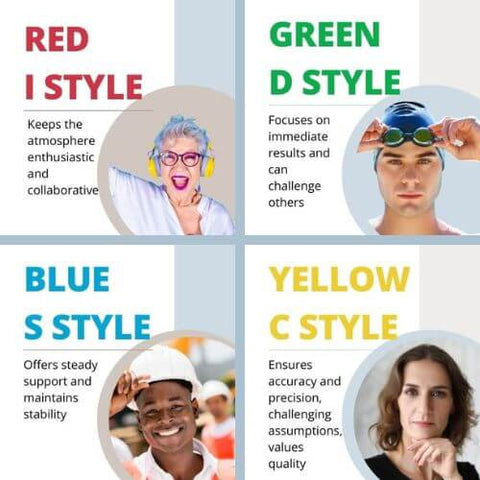
Give participants an email draft that sounds typically "D" (short, demanding, direct). Challenge them to rewrite that same email for an:
- "S" style recipient (adding warmth, reassurance, and timeline)
- "C" style recipient (adding data, logic, and precision).
- "i" style participant (friendly, conversational and enthusiastic)
Practical Application: Reducing Friction in Daily Workflows
Ask the group to identify one real-world, high-stress email they need to send this week. Have them use their DiSC knowledge to map the recipient’s style and draft a message that will minimise pushback and maximise alignment.
Debrief: The Impact of Intent vs. Perception in Digital Communication
Discuss how "concise" to a "D" style can feel "rude" to an "S" style. This realisation can be an absolute major "Aha!" moment for teams struggling with perceived hostility in remote or hybrid settings. You can run this activity for any of the styles an obvious example would be the reverse of this discussion, how an “S” style can make a “D” Style feel frustrated at times.
Activity 3: The Productive Conflict Role-Play (Navigating Tension)
Objective: Applying Agile EQ to High-Stakes Interactions
Conflict is inevitable in most workplaces; the objective being is to make it productive. This activity uses role-play to practice "freezing" a tense moment to choose a more effective response.
Scenario Building: Tailoring Challenges to Organisation-Specific Pain Points
As part of your preparation, design scenarios that mirror actual organisational tensions, such as a missed deadline or a disagreement over project direction. The more realistic the scenario, the higher the engagement. Even better make these scenarios industry specific to the organisation, you are working with, you could even approach management in an attempt to establish any common friction points.
The "Freeze-Frame" Technique: Real-Time Behavioural Recognition Practice

During the role-play, the facilitator (or another participant) can shout "Freeze!" at any point. The person playing the role must then articulate what they are feeling, what style their counterpart is displaying, and how they can pivot their behaviour to de-escalate the tension. You could encourage the group to offer input at this point too.
Debrief: Choosing a Productive Response Over a Reflexive One
Focus the debrief on the process of choosing a reaction. Ask participants: "How did it feel to pause? What did you notice about the other person’s style when you shifted your approach?"
Activity 4: The DiSC Style Sculpture (Visualising Team Dynamics)
Objective: Mapping Cultural Trends and Potential Blind Spots
This activity provides a "helicopter view" of the team’s collective behaviour. It is vital for leadership teams to understand where their group might be over-indexed (focussing too heavily on one variable) or missing key competencies.
Instructions: Physical or Virtual Mapping of the DiSC® Dimensions of Behaviour

Use a large floor map or an interactive virtual whiteboard. Ask participants to place a token in the quadrant that represents their primary style.
Identifying the "Power Centres" and Gaps in Your Team’s Profile
Observe the clusters. For example If a team is dominated by "D" and "I" styles, where is the "C" focus on detail? If the team is all "S," who is pushing for change? Facilitators should lead a discussion on how these gaps impact team speed and accuracy.
Debrief: How Diversity and Inclusion Benefit from Style Awareness
Connect the dots between behavioural diversity and team performance. A team that recognises its own "culture" is better equipped to hire, delegate, and manage projects by intentionally balancing styles to cover their blind spots. See The Role of EDI and DiSC in Building a Resilient Workforce
Activity 5: The Influence Action Planner (The Bridge to Performance)
This final activity is the bridge from the workshop back to reality. Participants complete an "Influence Action Planner" where they identify one specific relationship in their professional life that requires a change in approach. They must identify the target's likely style, the friction point in their current interaction, and three concrete "stretch" behaviours they will implement over the next 30 days. This shifts the focus from theoretical learning to measurable, individual performance improvement.

Conclusion
Facilitating an Everything DiSC workshop requires more than just subject matter expertise; it requires the ability to connect abstract behavioural models to the concrete reality of your participants' daily lives. By moving beyond simple exercises and into the realm of behavioural strategy, you can turn a standard training session into a powerful lever for organisational performance.

Remember, the goal of DiSC is not to define people, but to provide them with the flexibility to adapt. Encourage your participants to view their DiSC profile as a baseline, not a limit. When team members understand their own tendencies and those of their colleagues, they reduce the friction inherent in professional relationships and unlock a higher level of trust and collaboration.
You will likely find Beyond the Surface: What a DiSC Profile Can Tell You About Yourself helpful.
To ensure long-term sustainability:
- Reinforce with Technology: Use the Catalyst Platform or follow-up reports to keep the language alive. Consider purchasing DiSC personalised mugs for a little fun and ongoing recognition in the workplace.
- Normalise the Conversation: Encourage leaders to openly mention their styles and their "stretch" goals in meetings.
- Measure the Change: Conduct a follow-up session in 90 days to track how participants have applied their Action Planners.
- Why not introduce the idea of some DiSC merchandise, perhaps some DiSC mugs, they will almost always trigger a light hearted comment or conversation,

The most successful facilitators are those who understand that they are not just teaching a model—they are facilitating a cultural shift toward agility, empathy, and professional excellence. See The Smarter Way to Run DiSC Across an Organisation.
By consistently linking every activity back to the tangible goals of the organisation, you will transform the "DiSC workshop" into a foundational step in your organisation’s ongoing journey toward high-performance culture.
Q & A
Q: What is Everything DiSC and how does it work in learning programs?
A: Everything DiSC is a personality assessment tool designed to improve workplace communication and team dynamics by identifying individual behavioural styles:

- It works by categorising personalities into four primary styles: Dominance, Influence, Steadiness, and Conscientiousness, helping individuals understand their own and others' behaviours.
- In learning programs, Everything DiSC provides personalised insights and actionable strategies that participants can use to enhance collaboration, resolve conflicts, and increase productivity.
- The tool's interactive and engaging format, often incorporating workshops and activities, facilitates deeper understanding and application of the concepts within teams and organisations

Q: How can I adapt Everything DiSC activities for virtual or hybrid training sessions?
- A: Use Virtual Platforms**: Choose reliable platforms like Zoom, Microsoft Teams, or Webex that offer breakout rooms, screen sharing, and poll features to facilitate interactive activities. Ensure you have selected DiSC on Catalyst to use across your team or organisation
- Digitise Materials: Convert all training materials, including assessments, handouts, and workbooks, into digital formats that can be easily accessed and used online. Everything DiSC on Catalyst’s Facilitation Kit allows you to adapt and brand as you wish. Other Facilitation Kits available here.
- Interactive Tools: Incorporate interactive tools such as whiteboards, polls, and chat features to engage participants actively and simulate in-person interactions. NB if you choose DiSC on Catalyst, you will be able to run comparison reports in real time.
We offer free 30-minute consultations if you need to discuss your specific situation, no obligation, simply an honest conversation about what might work for your organisation.
Or
Simply unlock team potential with DiSC now by purchasing your DiSC reports directly:
Everything DiSC® (PDF)
Everything DiSC® Online Catalyst™
Unsure? visit: DiSC® Reports: A Buyer's Guide for Companies and Individuals
You can choose to have the access codes forwarded to you or directly to your cohort.
© Sian
My Training Shop LTD
Sian Phillips
Phone: 07876 469651
Email: info@mytrainingshop.co.uk
Website: https://mytrainingshop.co.uk/